Selecting a pump for high-solids tailings
Last updated 9 June 2026
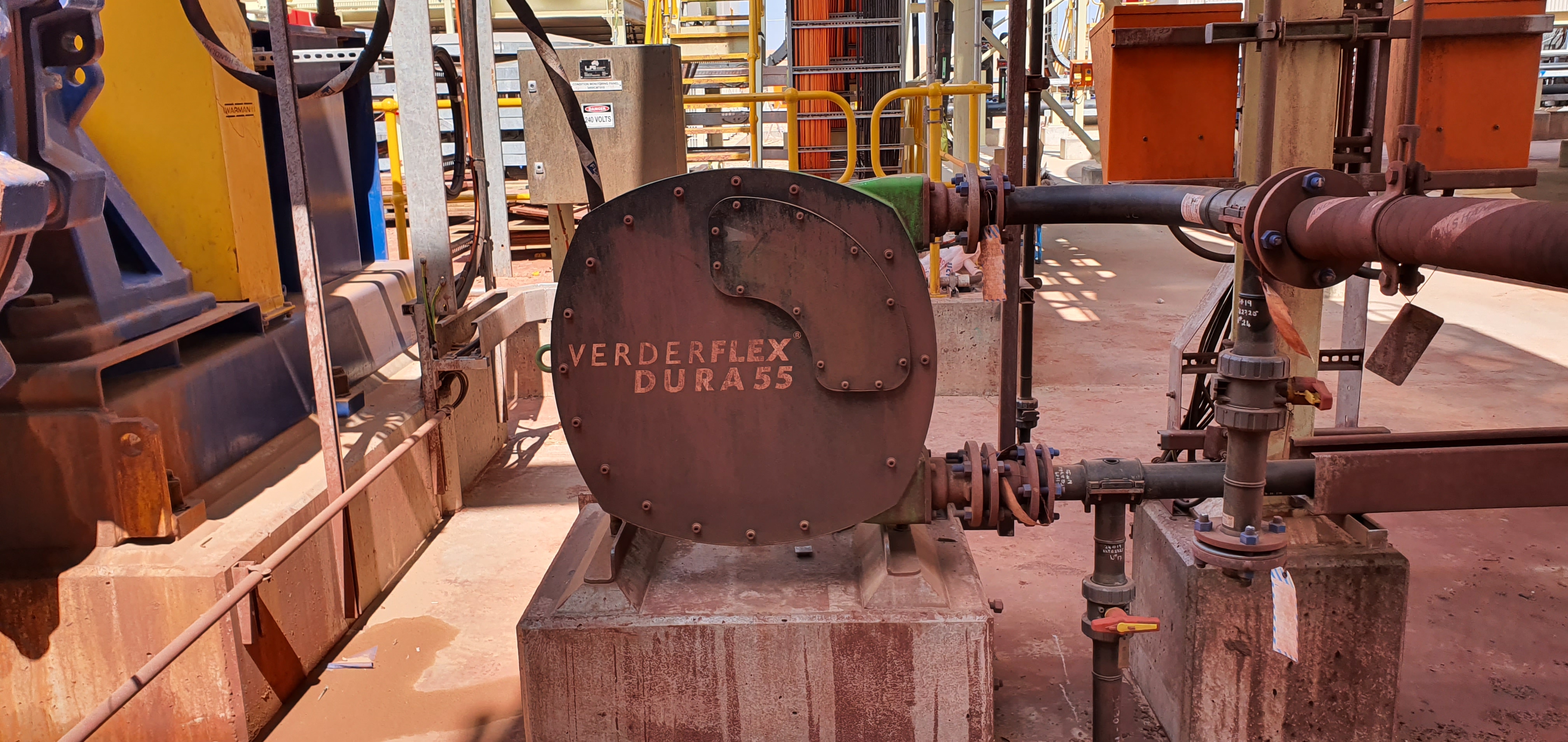
Practical considerations when moving from thickened underflow to paste, and where peristaltic pumps fit.
Selecting a Pump for High-Solids Tailings
High-solids tailings are one of the more difficult slurry applications to pump. The fluid is heavy, abrasive and often inconsistent. If the pump is not selected correctly, the result can be blocked pipework, rapid wear, loss of flow or repeated failures.
The key is to select the pump around the slurry, not just the flow rate.
1. Understand the Solids Content
The first question is how much solid material is in the slurry.
This may be shown as:
- Percentage solids by weight
- Percentage solids by volume
- Slurry density
- Specific gravity
High-solids tailings are much heavier than water. This affects pump power, wear rate, pipe velocity and the pressure required to move the slurry through the system.
A pump that can handle clean water at the same flow and head may not be suitable for tailings.
2. Know the Particle Size
Particle size is critical.
You need to understand:
- Maximum particle size
- Average particle size
- Whether the particles are sharp or rounded
- Whether the solids settle quickly
- Whether there are occasional oversize solids
Large or sharp particles can damage impellers, liners, hoses and seals. If the pump has small internal clearances, the solids may also block the pump.
3. Keep the Slurry Moving
Tailings can settle if the velocity is too low.
Once solids settle in the pipework, the system can become restricted or blocked. Restarting the pump may then become difficult or impossible without flushing the line.
Pipe velocity needs to be high enough to keep the solids suspended, but not so high that it causes unnecessary wear.
This is a balance.
Too slow can cause settling.
Too fast can cause rapid pipe and pump wear.
4. Consider the Pump Type
For high-solids tailings, common pump options include:
| Pump Type | Where It Can Work Well | Main Consideration |
|---|---|---|
| Slurry pump | High flow, abrasive slurry, mining duties | Needs correct materials and wear parts |
| Hose pump | Abrasive slurry, thickened tailings, metering or transfer | Hose life and pulsation need to be considered |
| Progressive cavity pump | Controlled flow and viscous slurry | Stator wear and dry running risk |
| AODD pump | Smaller transfer duties and difficult fluids | Air consumption and flow pulsation |
There is no single best pump for every tailings application. The right choice depends on the solids, flow, pressure, distance, duty cycle and maintenance expectations.
5. Select the Right Materials
Material selection is just as important as pump type.
For abrasive tailings, consider:
- High-chrome wet ends
- Rubber-lined components
- Hardened metals
- Abrasion-resistant hoses
- Suitable elastomers
- Wear-resistant pipework
The wrong material may work at first, but it can wear quickly and create ongoing maintenance issues.
6. Allow for Wear
Tailings pumps should not be selected too close to the limit.
As the pump wears, performance will gradually reduce. A pump that is only just capable when new may quickly fall short after wear begins.
Allow for:
- Impeller wear
- Liner wear
- Hose or stator wear
- Increased clearances
- Changing slurry conditions
A good selection allows the pump to keep performing between maintenance intervals.
7. Check Power Requirements
High-density slurry needs more power than water.
The motor needs to be sized for the actual slurry conditions, not just the water curve.
You should consider:
- Slurry specific gravity
- Required flow
- Total dynamic head
- Pump efficiency
- Start-up conditions
- Possible line blockage or high-pressure events
Undersized motors can trip, overload or fail prematurely.
8. Think About Maintenance Access
Tailings pumps wear. That is normal.
What matters is how easy the pump is to inspect, adjust and maintain.
Consider:
- Access to wear parts
- Ease of hose, stator, liner or impeller replacement
- Seal arrangement
- Flushing points
- Isolation valves
- Lifting access
- Spare parts availability
A pump that is difficult to maintain may cost more over its life than a pump with a higher initial purchase price.
Final Tip
When selecting a pump for high-solids tailings, do not only ask, “Can it pump the flow?”
Ask:
Can it keep the solids moving, survive the abrasion, handle the density and be maintained safely over time?
High-solids tailings are tough on equipment. The best pump selection is the one that matches the slurry, the system and the maintenance reality.